Naomi Watts Dedicates Donostia Award to Her ‘Mulholland Drive’ Director David Lynch: “I Miss You”

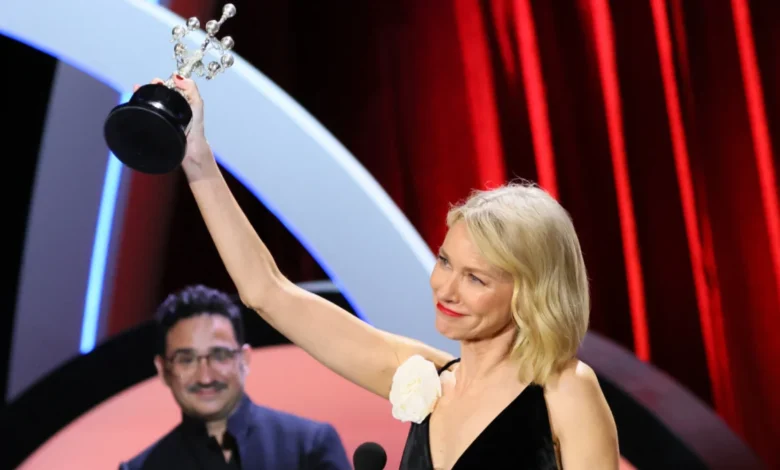
The San Sebastian International Film Festival reached a poignant high point this Saturday as British actress Naomi Watts accepted the Donostia Award, the festival’s highest honor for career achievement. Before a packed audience at the Kursaal Auditorium, Watts delivered a speech that transcended the standard formalities of an awards ceremony, choosing instead to dedicate the accolade to her long-time mentor and collaborator, the late David Lynch. The evening, which also featured a screening of her latest thriller, The Housewife, served as both a retrospective of a storied career and a defiant statement regarding the longevity of women in the film industry.
A Career Built on Persistence
The journey to the Donostia stage has been anything but linear for the 57-year-old actress. Addressing the crowd, Watts spoke candidly about the "not easy trajectory" of her early years in Hollywood. For a decade, the actress faced a barrage of rejection, with industry gatekeepers frequently suggesting that her window of opportunity was rapidly closing.
Watts recalled the prevailing industry sentiment during her early thirties, specifically noting the pervasive myth that a woman’s professional viability in Hollywood effectively "dried up" at the age of 40. By defying these expectations, Watts has become a vocal advocate for shifting the narrative surrounding aging actresses. "We need to see ourselves," she asserted during her acceptance speech. "Women are consumers of films and storytelling too. We want to see ourselves reflected on screen." Her continued success in high-profile projects proves that her reach remains global and her influence substantial.
The Lynch Connection: A Turning Point
The pivot in Watts’ career arrived in 2001 with the release of David Lynch’s surrealist masterpiece, Mulholland Drive. Watts credited Lynch with fundamentally altering her perception of the craft. Before their collaboration, she described her professional life as marked by the wounds of rejection; Lynch, she noted, helped her reframe those experiences as growth.
"He gave me the role that you couldn’t even dream for," Watts remarked. "He gave me a different understanding of what it meant to act, to trust instinct, to embrace uncertainty, and to not be afraid of the strange or the unexplained." She emphasized that Lynch believed in her capabilities long before she possessed the self-assurance to do so herself. By dedicating the award to him, Watts underscored the profound debt the film industry owes to the director, whose avant-garde sensibilities helped define the aesthetic of early 21st-century cinema.
Collaborative Ties and The Impossible
The evening was further marked by an emotional introduction from Spanish filmmaker J.A. Bayona, who directed Watts in the 2012 drama The Impossible. The film, which chronicled the harrowing true story of a family caught in the 2004 Boxing Day tsunami, proved to be a critical and commercial watershed, grossing over $198 million worldwide and securing Watts her second Academy Award nomination for Best Actress.
Bayona’s tribute was deeply personal, as he thanked the actress for her trust during a period when he was a fledgling director facing the immense pressure of a high-budget production. "For being the best travel companion I’ve ever had, and for teaching me something that, today, I’m still looking for every time I start working in front of a new actor," Bayona said.
Watts reciprocated the sentiment by recalling the grueling nature of the shoot. With characteristic humor, she referenced the physical toll of filming, specifically the endless takes in a submerged water tank. She noted that while her then-teenage co-star Tom Holland—who made his live-action debut in the film—jokingly referred to the set as the "best water park," she remembered it as "pure pain." The anecdote served to illustrate the intense commitment required to bring such a visceral story to the screen, a hallmark of the collaborative environment that Bayona fostered.
Expanding the Filmography: From Indie to Blockbuster
Throughout her career, Watts has curated a filmography that defies simple categorization, moving fluidly between independent dramas and high-budget studio tentpoles. Her portfolio includes work with a roster of directors that reads like a survey of contemporary cinema history: Peter Jackson (King Kong), David Cronenberg (Eastern Promises), Clint Eastwood (J. Edgar), Michael Haneke (Funny Games), and Noah Baumbach (While We’re Young).
Her breakthrough came in 2003 with Alejandro González Iñárritu’s 21 Grams, which earned her a first Oscar nomination. Whether portraying a grieving mother or a complex, multifaceted protagonist, Watts has maintained a reputation for choosing roles that prioritize psychological depth over commercial convenience. Her upcoming feature, The Housewife, directed by Ben Shirinian, continues this trend. Set in 1964 New York, the film follows a journalist who uncovers the secret identity of a suspected Nazi officer living in Queens, focusing on the complex relationship he develops with the suspect’s wife. The project, which also stars Tye Sheridan, Michael Imperioli, and Luke Evans, is being positioned as a tense psychological study, further cementing Watts’ status as a versatile leading lady.
The San Sebastian Context
The San Sebastian International Film Festival, now in its 73rd edition, continues to be a cornerstone of European cinema, often acting as a launchpad for major fall releases. The 2026 iteration, running from September 18 to 26, kicked off with significant fanfare, including a Donostia Award for legendary filmmaker Werner Herzog.
The festival’s decision to honor Watts aligns with its mission to recognize artists who bridge the gap between auteur-driven independent projects and mainstream industry successes. Festival director José Luis Rebordinos has long emphasized the importance of the festival as a space for political and cultural discourse, and the presence of stars like Watts serves to amplify the visibility of the festival on the global stage.
Implications for the Industry
Watts’ recognition in San Sebastian is not merely a celebration of her past work, but a signal of the evolving expectations for veteran actors. By explicitly rejecting the "shelf life" narrative forced upon women in their middle years, she is participating in a broader industry shift that has seen a rise in complex roles for women over 50.
Moreover, her focus on David Lynch serves as a reminder of the vital importance of mentorship. In an industry often preoccupied with current box-office returns, Watts’ reflection on the formative impact of a single visionary director highlights how long-term creative relationships are the bedrock of cinematic innovation.
As the festival continues its run, the discourse surrounding the Donostia recipients—Herzog and Watts—highlights a clear thematic focus for this year: the endurance of the creative spirit. For Watts, who told the audience, "I still have lots more in me and I’m still reaching for the stars," the award is not a capstone to a career, but rather a pivot point toward future projects.
Looking Forward
The final moments of her speech provided a glimpse into her ongoing ambition. After thanking the festival organizers and the Spanish film community—a group with whom she has maintained a close relationship since the filming of The Impossible—she held the Donostia trophy aloft. The image was one of triumph, tempered by a touching, final acknowledgement of her missing mentor. "David Lynch," she said, "I miss you."
As she continues to champion diverse storytelling and challenge the constraints placed upon her demographic, Watts remains one of the few actors capable of commanding both critical respect and wide audience appeal. Her presence at San Sebastian serves as a testament to a career that has evolved from the uncertainty of a newcomer to the grounded authority of an industry veteran, ensuring that her influence will be felt in the narratives of the next generation of filmmakers.